
Operational Intelligence
Reduce Operational Risk.
Improve Performance.
Build Readiness to Scale.
Apex Operational Intelligence helps growing operations gain clarity, control, and confidence by turning execution reality into actionable signals. Delivery is automation-first through OIRS™ scoring and the Forge Dashboard—so leaders get decision support without building an internal analytics team.
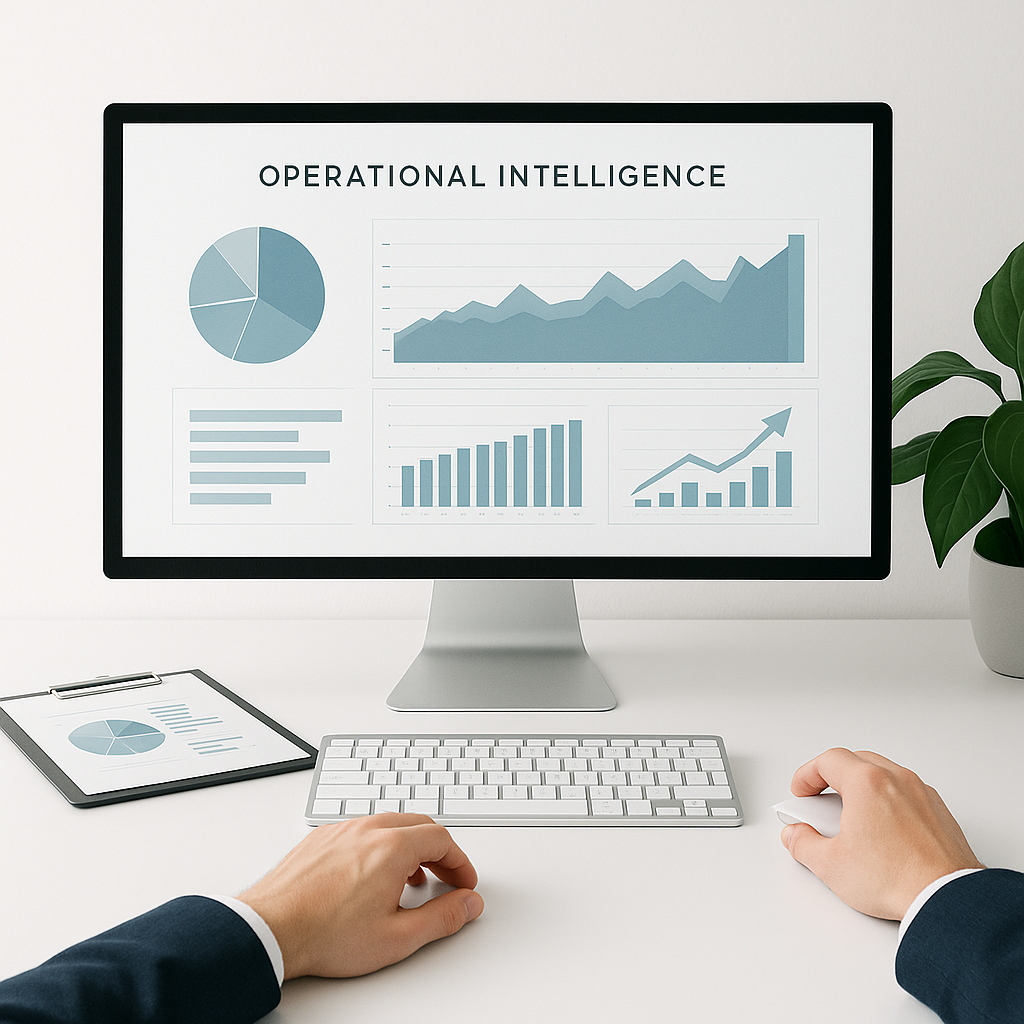
Operational intelligence that works in the real world
We focus on what leaders actually need to run operations under pressure: visibility, prioritization, and execution systems that scale.
Operational Risk Control
Surface breakdown risk early, reduce surprises, and prevent repeat execution failures before they hit customers or cost.
Financial Performance
Improve throughput, labor efficiency, and cost discipline by tying daily execution to financial outcomes—not vanity reporting.
Readiness to Scale
Build the KPI definitions, decision loops, and accountability needed to scale without chaos, burnout, or drift.
How it works
Apex follows a simple loop designed for speed and repeatability. The diagnostic establishes baseline posture; ongoing intelligence updates are derived from operational signals and trends.
1) Start with the diagnostic
Complete the free operational diagnostic to establish baseline risk posture and execution stability.
- OIRS™ scorecard baseline
- Top risk drivers and constraints
- Recommended starting tier
2) Activate the Forge Dashboard
Your intelligence delivery lives in the Forge Dashboard (OIRS™ module)—provided as a portal even if you are not deploying Forge OES.
- Score movement + posture visibility
- KPI trends and drift signals
- Executive-ready read-only access
3) Operate with control
Choose the tier that matches your environment. Monthly outputs update as your operation changes—without weekly consulting dependency.
- Baseline → visibility
- Control → stability + trend signals
- Ascent → foresight + constraint awareness
Built for operations under pressure
Apex supports logistics, warehousing, ecommerce, manufacturing, and distribution—especially founder-led and scaling operations where execution gaps become growth barriers.
Explore more
Navigate deeper into OIRS™, packages, and the Forge ecosystem.
What improves over 30 / 60 / 90–120 days
Outcomes depend on complexity and signal quality, but these are the most common improvements when leaders use operational intelligence consistently.
Posture becomes visible, KPI definitions tighten, and leaders align on what matters most.
Trend drift shows up earlier, reducing surprise cost and improving correction speed.
Fewer recurring issues, clearer ownership, and more predictable throughput under pressure.
FAQ
What is OIRS™?
OIRS™ (Operational Intelligence Readiness Score) is Apex’s scoring framework that quantifies operational risk posture, execution stability, and readiness to scale—so leaders can prioritize the right actions.
Do we need Forge OES to get the Forge Dashboard?
No. OIRS™ packages include Forge Dashboard access as a portal for intelligence delivery. Forge OES is a separate operational capture system used when you need stronger execution/inventory signal inputs.
Is this a consulting service with weekly calls?
No. The core model is automation-first. Human involvement is minimal and reserved for premium add-ons when deeper engagement is needed.
How does pricing work?
OIRS™ tiers are monthly subscriptions and include a one-time setup fee (3× the monthly price) billed once at onboarding to activate scoring workflows and provision Forge Dashboard views.
How fast do we see value?
Most teams gain clarity immediately after the diagnostic and see compounding value as signal inputs stabilize and trend movement becomes visible over the first 30–60 days.
What if we already have an ERP/WMS?
That’s fine. Apex focuses on operational intelligence and decisioning. Existing systems can provide inputs; the goal is to turn operational reality into usable signals leaders can run consistently.
Start with clarity, not guesswork
The free operational diagnostic highlights risk, performance gaps, and readiness constraints—then outlines practical next steps you can execute immediately.